
How wealthy Africans build wealth, and what the playbook needs next
Property and a family business built African wealth, and they are the same assets wealthy families hold everywhere. The difference is the system the assets sit in.
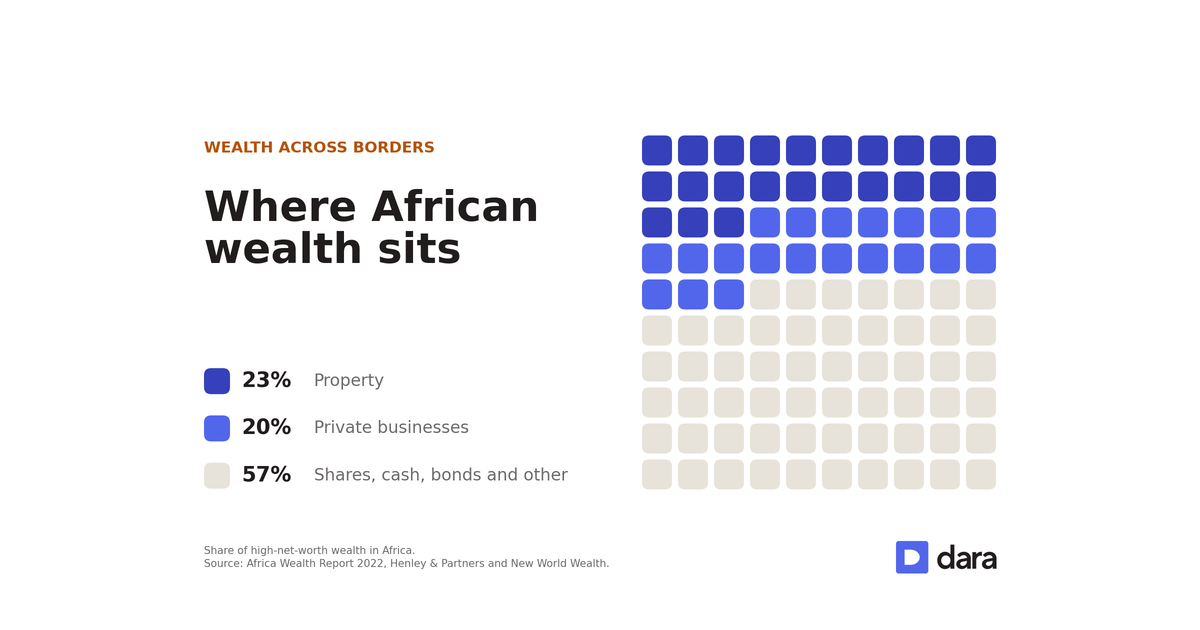
A successful African professional or business owner tends to do two things with new money. They buy property, and they build or buy a business. The house goes to the children. The business pays the family.
That playbook works. It built most of the private wealth on the continent, and it is the same playbook wealthy families run in the United States.
Property and business: the right instinct
The Africa Wealth Report 2022 from Henley & Partners and New World Wealth estimated how wealthy Africans hold their assets. Real estate was about 23% and business interests about 20%, so property and private companies together made up more than 40%. Listed shares were about 30%, a figure that leans on South Africa's large stock market.
Property and operating businesses sit at the core of family wealth almost everywhere. A building holds value when a currency falls. A business produces income the family controls. Recent wealth reports note that Africa's richest are moving further into real estate to protect value against currency depreciation. Families who chose land and enterprise chose well.
Same assets, different system
A wealthy family in the United States holds the same things: a home, a few rental buildings, a share in a business. What differs is the structure around them.
- The building sits in a limited liability company, and the company is often owned by a family trust.
- Ownership is on a public record, and title insurance stands behind the deed.
- When the owner dies, property held in a trust passes to the heirs without going through probate court.
- A lender will lend against a rental property based on the rent it earns.
None of this changes the building. It changes what the building can do for the family. The problem is not the asset. It is the system the asset sits in.
The three costs, and what really causes them
Liquidity. Every building is slow to sell. A building in Nigeria and a building in the United States can both take months. The difference is what the owner can do in the meantime. The US building earns dollars, and a lender will lend against that income on known terms. Liquidity comes from the system around the property, not from the property.
Succession. Passing on property is easiest where the legal tools for it come ready-made. In the United States, a family can place a property in a trust with standard documents, because that machinery has existed for generations. The house is the same. The handover is not.
Concentration. This is the one real cost of the playbook as most families run it today. When every building and every business sits in one country and one currency, one hard year in that market reaches all of it. The answer is not fewer buildings. It is the same playbook in more than one place.
The next generation's playbook
The families who built wealth on land and enterprise do not need a new strategy. They need the same strategy, run across borders: property in more than one currency, held in structures that pass on cleanly, earning income a bank will lend against.
- How much of what we own earns in one currency?
- If we needed cash quickly, which of our assets could we borrow against?
- Is each property held in a structure that passes to the next generation without a dispute?
- Where else could the same playbook run?
The playbook that built African wealth still works. The next step is to run it in more than one place, inside a system built to carry it.
Responses